Surface Treatment of Screw
The surface coating on a screw is as important as the underlying screwr material. screws threads are manufactured in a cutting or forming machining process, and the surface coatings add an essential layer of protection to the screw shank and threads.
To this end, screw benefit greatly from a wide range of engineered surface coatings which are tailored to each screw application with the goal of providing optimal protection against corrosion and cracking.
In a nutshell, surface coatings are applied to screws to add significant resistance to surface degradation and protect the screw from premature failure as a result of corrosion or cracking.
so what are the common treatment methods for screw? The most common methods of screw surface treatment are as follows:
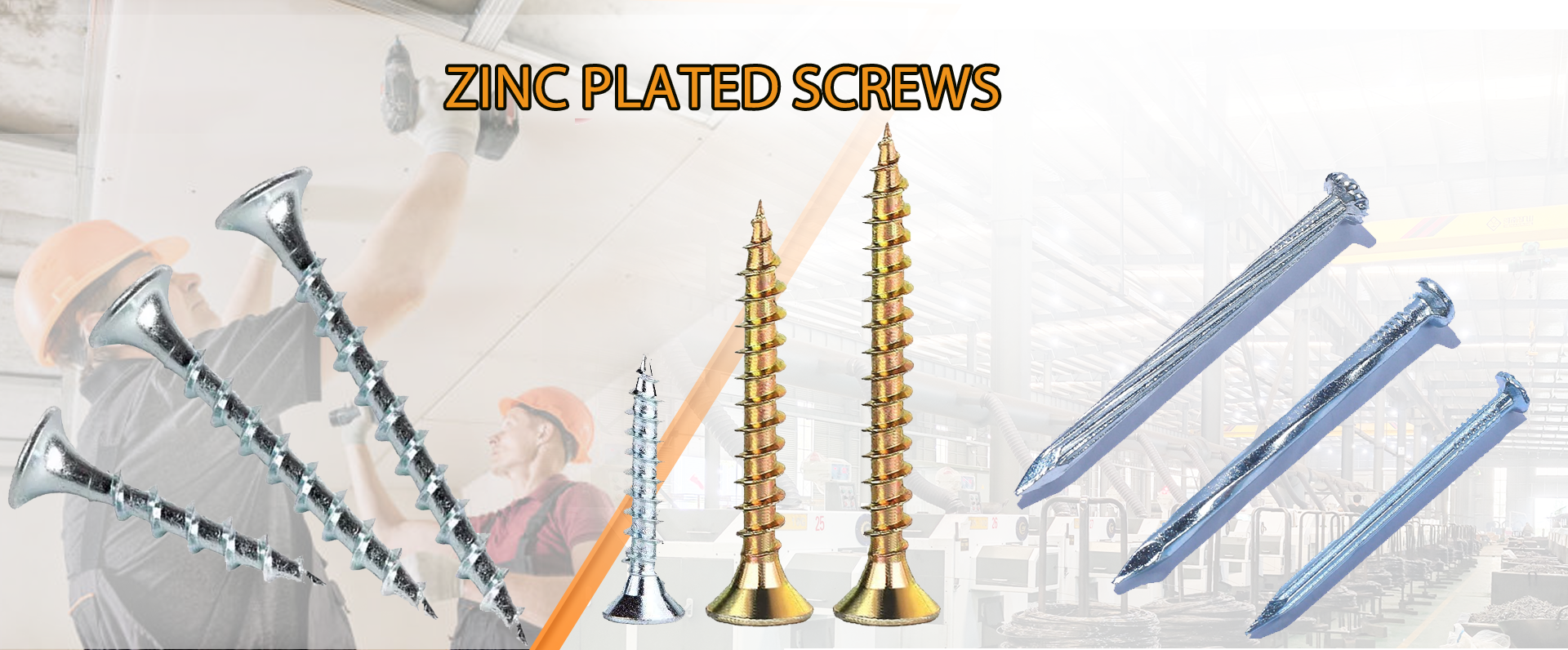
1. Zinc plating
Electro galvanizing is the most commonly used surface treatment method for Screw. It not only has low cost, but also has beautiful appearance. It can be electroplated into black and military green. However, one of the disadvantages of electro galvanizing is that its anti-corrosion performance is general, and its anti-corrosion performance is the lowest among the plating (coating) layers. Generally, the screws after electro galvanizing can pass the neutral salt spray test within 72 hours, and special sealing agent is also used, so that the salt spray test after electro galvanizing can reach more than 200 hours, but its price is expensive, 5-8 times that of general galvanizing.
2. Chromium plating
The chromium coating of screw fastener is stable in the atmosphere, not easy to change color and lose luster, high hardness and good wear resistance. Chromium coating is generally used as decoration on fasteners, but it is rarely used in industries with high corrosion resistance. Because good chrome plated fasteners are as expensive as stainless steel, only when the strength of stainless steel is not enough, chrome plated fasteners can be used instead. In order to improve the corrosion resistance of chromium plating, copper and nickel should be plated before chromium plating. Chromium coating can withstand the high temperature of 1200 degrees Fahrenheit (650 ℃), but it also has the same problem of hydrogen embrittlement as galvanizing.
3. Silver and nickel plating on the surface
The use of silver coating for screw fasteners can not only prevent corrosion, but also be used as solid lubricant for fasteners. Due to the cost, the nuts are usually silver plated, the bolts are not used, and sometimes the small bolts are also silver plated. Silver is tarnished in the air, but can work at 1600 degrees Fahrenheit. Therefore, people use its high temperature resistance and lubrication characteristics to work in high temperature fasteners to prevent oxidation of screw. The nickel plating of fasteners is mainly used in places with good corrosion resistance and conductivity. Such as the outgoing terminal of vehicle battery, etc.
4. Screw surface treatment Dacromet
There is no hydrogen embrittlement in the surface treatment of Dacromet for screw fasteners, and the consistent performance of torque preload is very good. But its pollution is serious. In fact, it is most suitable for high strength fasteners with high anti-corrosion requirements without considering the problems of chromium and environmental protection.
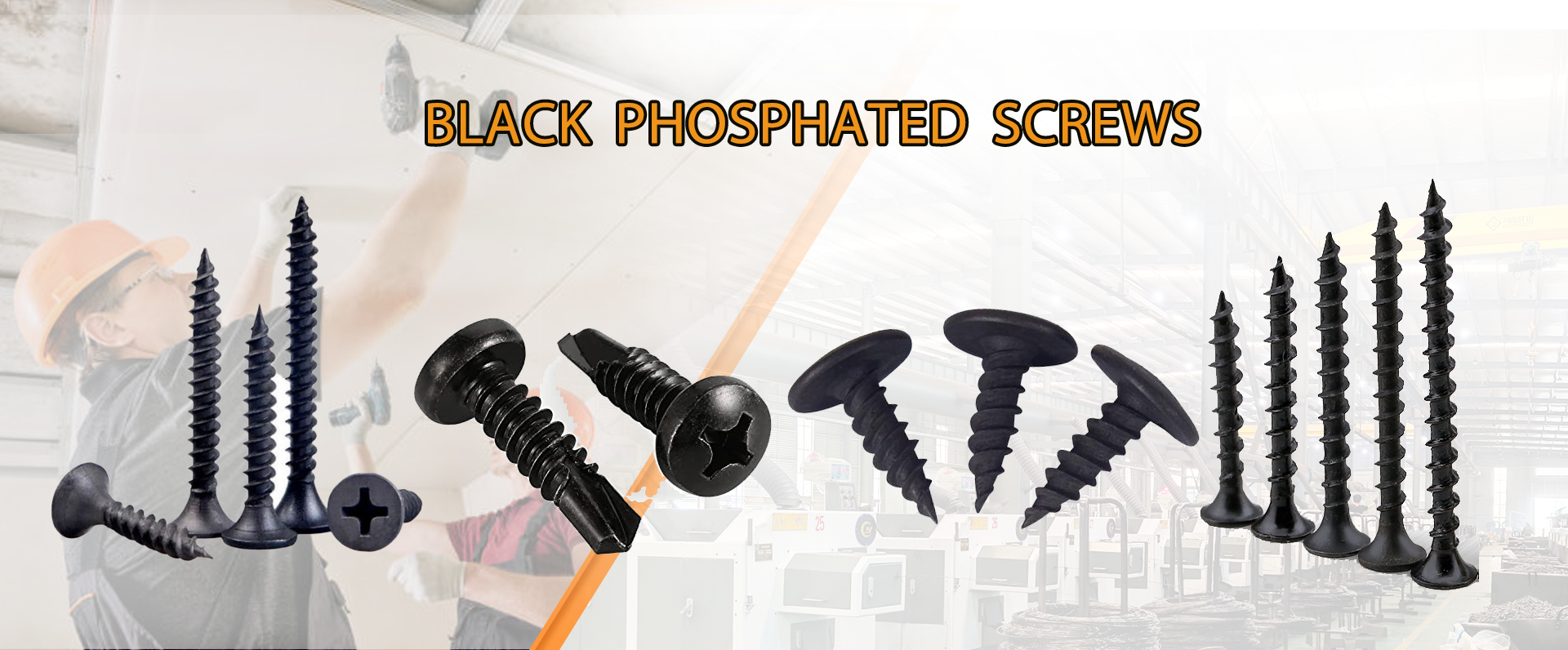
5. Surface phosphating
Phosphating is cheaper than galvanizing, but its corrosion resistance is worse than galvanizing. After phosphating, screw fasteners should be coated with oil, because its corrosion resistance has a lot to do with the performance of the oil. After phosphating, apply general antirust oil, and the salt spray test can only take 10-20 hours. If some advanced antirust oil is applied, the screw fastener can take 72-96 hours, but the price is 2-3 times of phosphating oil. Most of the industrial screw fasteners are treated by phosphating + oiling, because its torque and pre tightening force have good consistent performance. In the assembly of parts and components, it can meet the expected fastening requirements, so it is widely used in industrial construction. Especially for the connection of some important parts: some screw adopt phosphating, which can also avoid the problem of hydrogen embrittlement. Therefore, in the industrial field, the bolts above grade 10.9 are generally treated with phosphating surface.